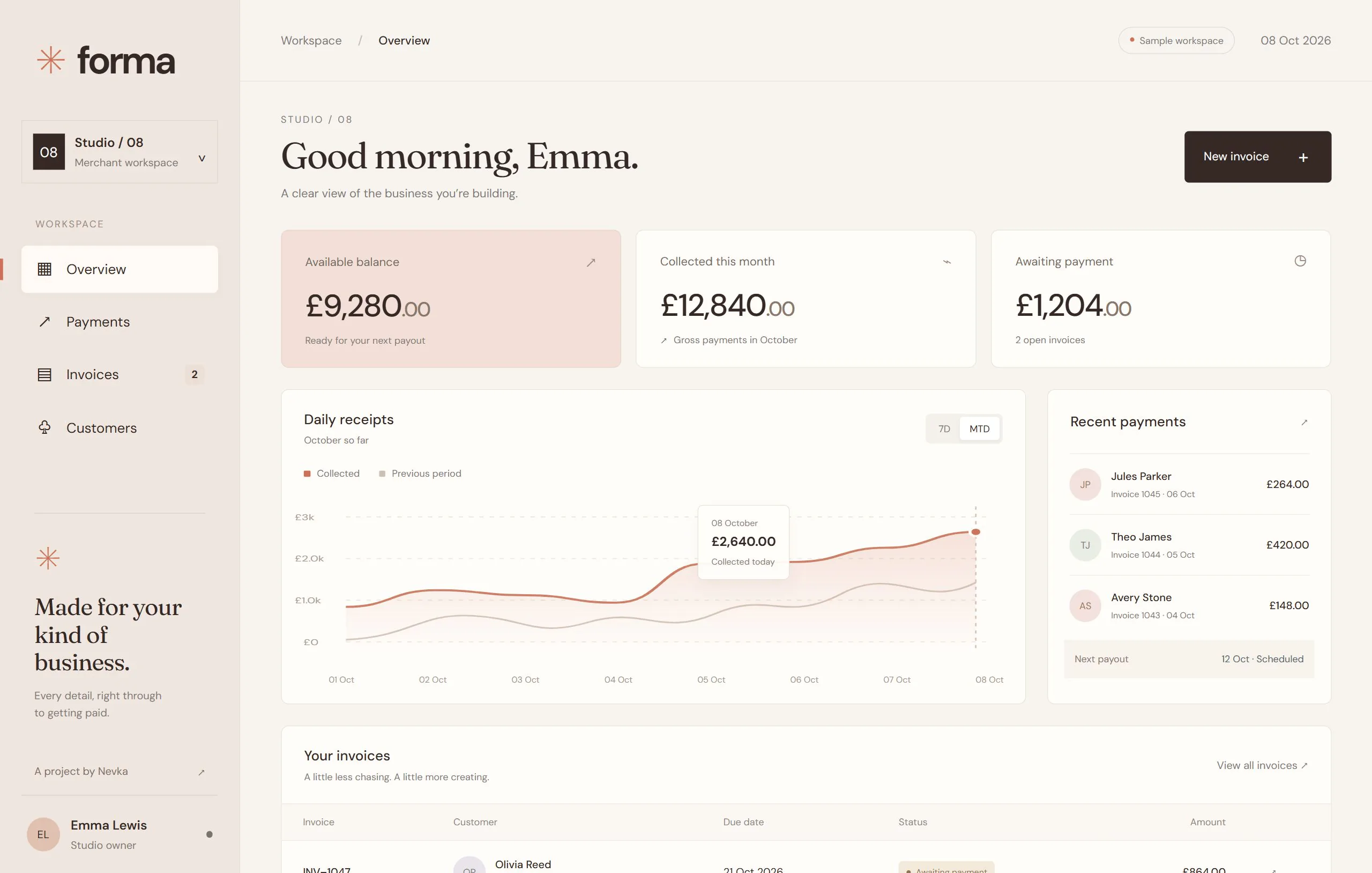
One reconciled portfolio
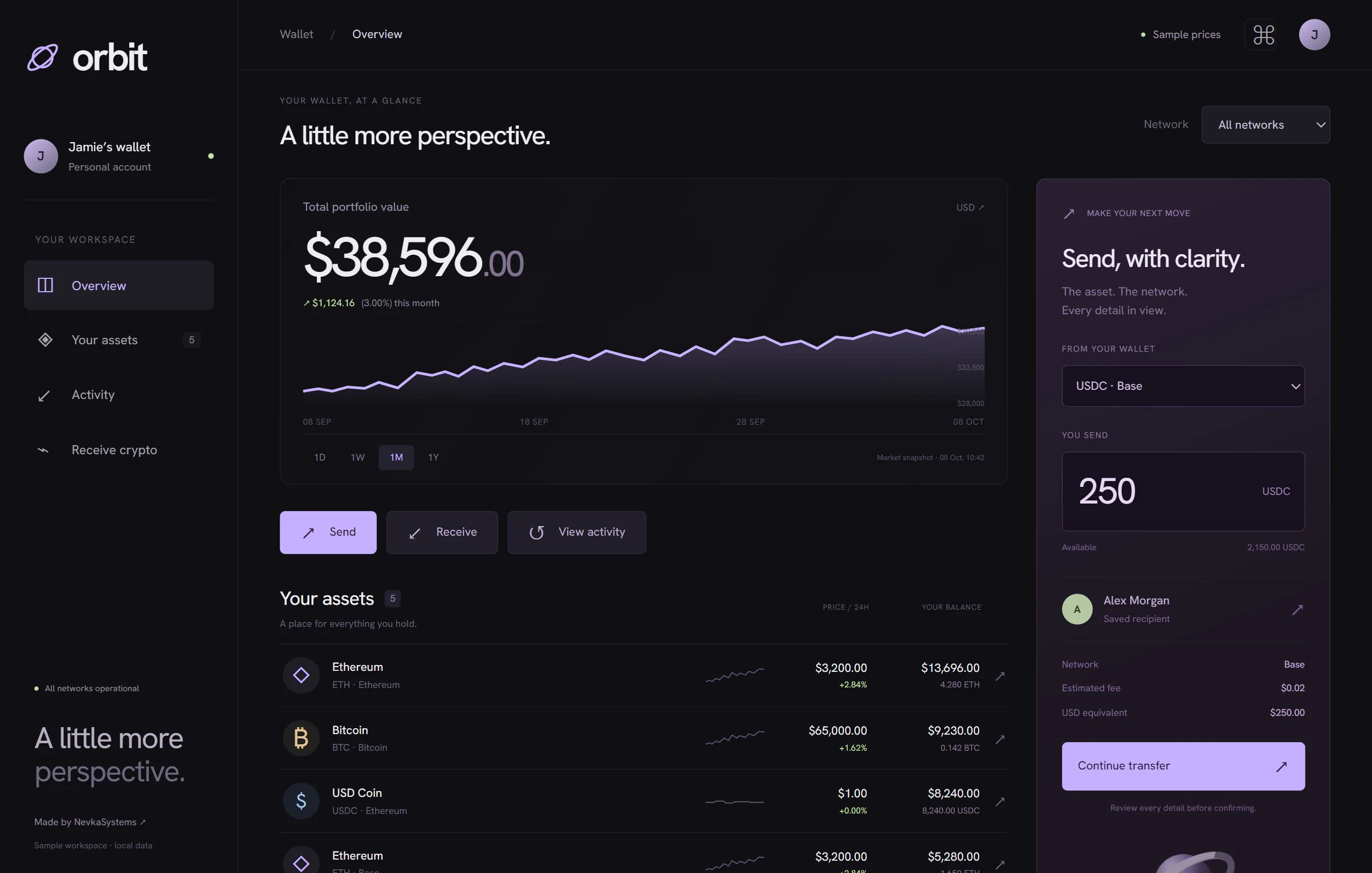
Five positions across Ethereum, Base and Bitcoin roll up into a shared portfolio total. Network filters, asset details, performance ranges and activity all reflect the same account state.
Digital assets 2026
A complete digital wallet workspace that brings holdings, networks and transfers into one clear view. Orbit follows a real sequence from portfolio insight to a reviewed transfer and reconciled activity record.
Explore a holding, review a network fee and follow a sample send into the activity record.

Asset details retain their chain and contract context. Changing the network filters the holdings and the available send options.
Destination, amount and network fee appear in one review. Insufficient balances and invalid entries keep the transfer from continuing.
The sample send updates token and fee balances separately, then records a receipt that can be reopened from activity.

Inside the wallet
The 30-second guided walkthrough filters the portfolio to Base, opens USDC, fills a transfer, reviews its fee, confirms a local record and opens the receipt. The numbers reconcile throughout.

Five positions across Ethereum, Base and Bitcoin roll up into a shared portfolio total. Network filters, asset details, performance ranges and activity all reflect the same account state.
Choose an asset and network, select a saved recipient, enter an amount, check the native-token fee and review the debit. A local confirmation deducts the asset and network fee and adds a receipt to the activity history.
Address format checks, available-balance validation, separate gas balances and editable review steps make the journey credible. Receiving addresses and asset breakdowns use dedicated detail panels.
Engineering approach / Proposed architecture
Orbit connects a wallet address to its network, retrieves balances and keeps transaction history in context. The send journey would ask a compatible wallet to sign the reviewed instruction, with chain-specific preparation and confirmation.
Resolve the selected address, network and asset identifier before loading data. The same token symbol can refer to different contracts.
Use the appropriate network adapter to retrieve balances and activity. Keep the source block or update time with the result.
Validate the destination and network, estimate the fee and show the complete instruction before requesting a signature.
Follow the submitted transaction through pending, included and confirmed states. Refresh the balance when its chain record changes.
Under the surface
Explore the system behaviour, integration choices and operational detail.
Key balances by network, address and asset identifier, including the token contract where relevant. Keep quantities in base units and apply asset decimals for display. A network change must invalidate the previous view before new data appears.
For the proposed non-custodial flow, the app would prepare the instruction and a compatible wallet would handle signing. Handle rejected requests and account or chain changes explicitly. Private keys and recovery phrases would stay outside the application backend.
Treat Ethereum-compatible networks and Bitcoin as separate integrations. Keep transaction hashes and block references, account for chain reorganisations and define confirmation rules per network. A broadcast response alone would not mark a transfer complete.
Your next fintech product
Tell us about your customers, workflows and technical requirements. We’ll shape the right approach together.